-
New Year, Old Me
I’ve always liked the idea of New Year’s resolutions. At its essence, these resolutions are a great way to force yourself to reflect on how you want to change the way you live your life. The way I’ve seen New Year’s resolutions typically portrayed is as a way to take stock of everything that’s happened during the year, think about what went well and what didn’t, and create a plan for self improvement. I think this is an admirable goal in principle, but personally, I’ve often found this method overwhelming. I can think of numerous ways I could have changed the way I lived my life this year to make it more “fulfilling”, but it’s hard to know how feasible any of those proposed changes are in the hustle and bustle of daily life. There are lots of things that I think I should do, but it’s hard to know which one of these things I’ll actually be sufficiently motivated to do. It’s of course important to sometimes push myself to do things that I don’t want to do if I think they’ll be good for me, but I also think I need to be realistic enough to set goals that align with who I actually am today. As a result, I love the idea of reflecting in the New Year, but have always struggled with the idea of using the New Year as a way to make a grand assessment on general self-improvement.
The real reason that I like reflecting around New Year’s is that it comes at the end of a holiday break. Recently, I always budget some time in any break to be actively bored — I deliberately isolate myself from others for a few days with no plan whatsoever and simply observe what I end up filling the time with. This is where I feel like I get to know myself in the deepest way, because the things I end up doing aren’t influenced by friends, family, or the background noises that always surround us. I basically get a window into how I’d fill my time if I were optimizing purely for short term entertainment, and not compromising to fit things into the practical realities of the world.
This year, my choice of escapism was a road trip south along Highway 1 towards Big Sur. A few months ago I drove through most of Highway 1 going North from San Francisco to Canada, so I knew I wanted to explore this beautiful coastal road going South as well. Beyond that though, I put little thought into what I’d actually do once I got there, and trusted myself to come up with something entertaining. I started by driving down from San Francisco to Monterey, stopping for a bite to eat, and then heading down South towards Big Sur. Soon after I left Monterey, I lost cell service, and since I hadn’t planned anything ahead of time, I just kept driving down, occasionally stopping for light hikes along the highway turnouts. Eventually, I reached a dead end, where the highway was closed due to landslides. Luckily, this dead end was right next to a beautiful turnout with a perfect view of the sunset.
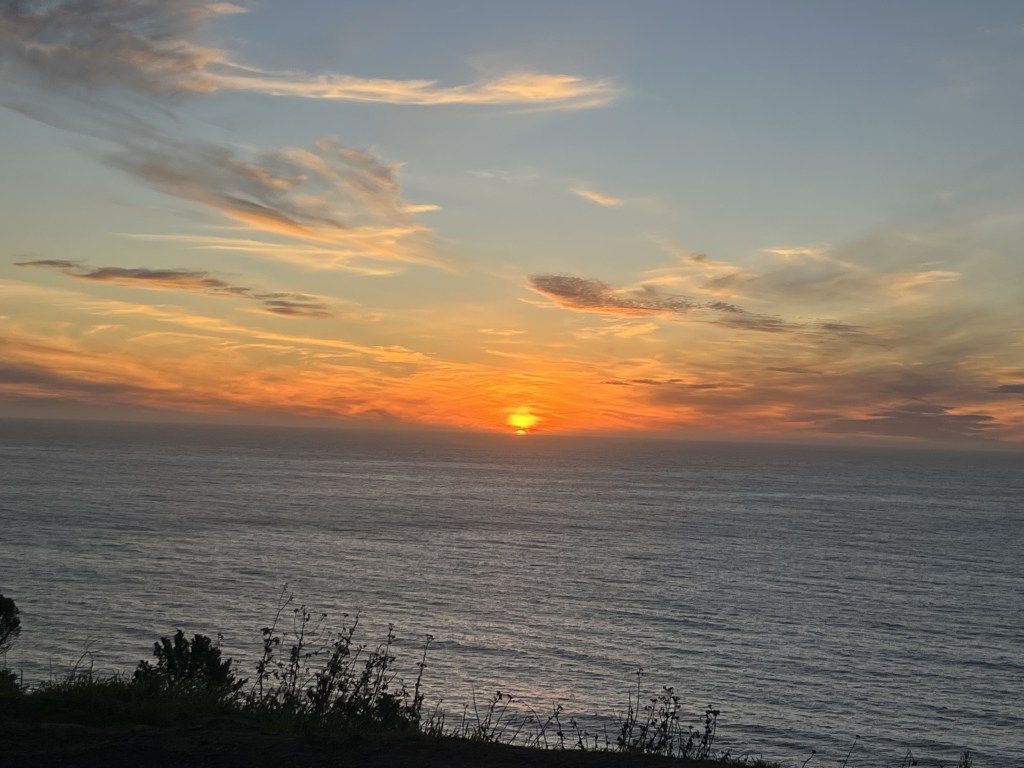
I sat here for a few hours looking at the waves and chatting with some other folks I met who were also enjoying the views. The remoteness of the place inspired me to stay a bit longer to stargaze, so I sat there for a while looking at the stars, listening to the crashing waves, and letting my mind wander. The first thoughts I had were just silly things that I was curious about: If I just looked at the waves, how well could I guess what the ocean floor looked like? Now if I closed my eyes and just heard the waves, how much information would be lost? If the water were perfectly still, and then someone dropped a small stone into it without telling me, how accurately could I tell where it was dropped based just on the ripples after 5 seconds? 10 seconds? 60 seconds? It had been a while since I’d just let myself wonder like that, without constraining myself to questions I thought I could actually answer or which had any practical value. I used to do things like this a lot, but the last few years have been such a whirlwind of job switches, travel, moves, and just general busyness that I had started to forget how much energy these random musings give me.
As I wondered aimlessly, I felt an urge to reflect on why it felt so liberating, and I started jotting down my thoughts on my phone notes app as I gazed at the stars. This became my last blog post, my return to blogging after a few years of break. In my manufactured boredom, I started to realize how much I missed the process of learning random things just for the joy of it, and how fun it can be to try and weave stories out of these learning experiences. This made me decide on two simple New Year’s resolutions to force me to recapture the enthusiasm I had for random intellectual exploration earlier in my life:
- Pick a fundamental topic I’m curious about with no clear practical utility to my life and learn about its history in great detail throughout the year.
- Document my learning process in this blog.
After some pondering, I’ve settled on studying a history of Time: how our conception of Time has changed throughout history and how that’s influenced the world we live in. It feels like an appropriate topic to think more about in the New Year, since a big part of New Year’s reflections is a wake up call that another year has now passed with the world as it is, with me living the way I am. This Calvin and Hobbes strip captures my thoughts about New Year’s quite well.

Sometimes all you need is an artificial reset to remind yourself that a New Year doesn’t always need some profound resolution, it can also just be about recapturing some of the adventures of the past.
-
The Pleasure of Finding Things Out
These days research in artificial intelligence is starting to grab every headline, and as a researcher working in the middle of this hype, I find myself reflecting a lot on what my true motivations are. I enjoy my work, but am also always weary of getting trapped in the inevitable rat race to start the next big AI company or come up with some big new idea in the field. To do something meaningful in any area, of course, hard work is extremely important. However, having a clear motivation focusing that work is perhaps even more critical.
For many, that motivation will be to create something that positively impacts the world. There are also practical considerations, such as money or power. I of course desire all of these things to some extent, but until recently, I’ve been struggling to piece together what truly motivates me as a scientific researcher.
The Calvin and Hobbes series by Bill Watterson were my favorite books as a kid. At that age, most of the overarching social commentary was lost on me, but one thing that did stick with me is the magic of a child’s imagination. Calvin has a seemingly unending amount of free time, but always finds some wacky adventure to go on, either in nature or in his own head. Growing up as an only child in Cupertino with two busy working parents, I too had lots of time on my hands, and was determined to come up with new ways to entertain myself beyond just watching TV or playing video games.
Most days after school, all of the kids in my neighborhood would assemble to figure out our plan for the evening. Sometimes when ideas were running dry, we’d settle for something conventional, like shooting hoops in my friend’s driveway or playing a new board game. But often we’d come up with something interesting. Those evenings were filled with random wacky adventures, from sword fighting with large leaves to playing whole neighborhood golf with sticks and pinecones we found on the street. My favorite game we played was a rather ridiculous one where we would ride our bikes with the goal of getting totally lost, and then slowly find our way back home. We knew the neighborhood quite well, so getting lost wasn’t actually that easy, but was made much easier by the fact that this was before the era of smartphones which could instantly tell you where you were. Everyday was an adventure where we’d discover new things like a park we’d never seen before or a new game we could play with random things on the street. To clarify, nothing we ever discovered was truly very novel, but it was new to us, and that’s all that really mattered. This constant piddling around was the highlight of my childhood.
Of course, like many children, school was a big part of my life too. However, for most of my early education, I wasn’t very motivated. I did reasonably well, but found the strict structure of classes and assignments stifling, and I rarely enjoyed learning in school. The one big exception was story time: I still remember the feeling of excitement when the teacher would dim the lights, let us all sit in a circle, and read us a story just for the sake of it, with no strict lesson plan guiding them.
This is not to say that I didn’t enjoy learning in general. My mom loved puzzles, so we’d go on many happy neighborhood walks doing random logic puzzles, where I accidentally learned some math and started to love puzzles myself. I also read voraciously, and kept a little “research” journal where I collected lots of random facts I’d read about, like how big the sun was or how many different animal species lived in the Amazon rainforest. I learned a lot through random exploration, but school just never did it for me in my early years.
That started to change in early high school, where I had a couple of wonderful American history and literature teachers who made their classes feel like the story time I loved so much in elementary school. Learning the story of my country in so much detail was eye opening. I especially thought that analyzing the implications of decisions made centuries ago was fascinating, because it inspired me to think about what might matter in making similar decisions today. Most of all though, it was fun! Instead of learning a bunch of random facts or formulas, this was a thrilling human story where all of us children were the final chapter.
My dad is a chemical engineer, and he always wondered why I showed so little interest in science and engineering growing up. He wasn’t the type to steer me in any particular direction, but found it strange that I didn’t have that same constant curiosity about how the world worked that he did. Looking back on those times, I’ve realized that my lack of interest was at least partially due to the way science was taught in school. We would spend a lot of time memorizing details about various scientific phenomena, and occasionally doing some experiments to confirm the facts we learned, but I never truly understood what being a scientist or engineer meant.
In the summer between my sophomore and junior year, someone recommended that I read the book Surely You’re Joking Mr Feynman. The book is a series of entertaining anecdotes about the life of Richard Feynman, a famous theoretical physicist in the first half of the twentieth century, the golden age of physics. Some of these stories are about physics, but many of them are not. However, what ties all of these stories together is how strongly they convey Feynman’s infectious curiosity and enthusiasm for learning new things. His motivation as a scientist was seemingly driven mostly by the pleasure of finding something out, or building something new. This included areas of study as disparate as learning how to translate Mayan hieroglyphics, picking locks at Los Alamos, and becoming a top notch Samba drummer. When working on a problem, whether it had important and broad societal implications was secondary. The journey of discovery was its own reward.
Reading this book changed the way I thought about science. Instead of viewing science as a set of statements about nature to be internalized, I got excited about the process of scientific discovery itself. When learning about atomic structure in chemistry or physics for example, I started to spend a lot of time reading about the history of how people had discovered all these wonderful things about atoms: Who first provided evidence that atoms existed at all? How did we go from this abstract understanding to learning that most of an atom is empty space? How did we figure out what the charges within an atom are and how they are distributed? How did we measure the masses of all of these particles? When viewed in this way, any random fact that I was told to memorize became a thrilling saga of discoveries that culminated in that fact.
I’ve found this way of thinking wonderfully useful as a researcher. Instead of just focusing on experiment results, I spend a lot of time thinking about how other researchers came up with the ideas they did. What series of prior work inspired them? Why was the time ripe for their discovery? What were all the bad ideas they must have tried before stumbling upon the one they published? Thinking about these questions is not only helpful in developing one’s own ability to do original research, but also makes research far more exciting. There’s an unfortunate incentive in scientific communication to write papers as if the key idea simply appeared out of thin air, making the main purpose of the paper an argument to convince the reader of the correctness or utility of the hypothesis or algorithm being presented. While this is of course valuable, it fails to capture what makes scientific research so exciting to me: the meandering, chaotic, and inventive process of stumbling upon ideas and finally finding something that works.
I often come back to both Surely You’re Joking and Calvin and Hobbes when I have a crisis in motivation. I’ve come to appreciate more nuance in the messages in Calvin and Hobbes in my adult life, especially the value of detachment from consumerism. Focusing on seeking wonderful experiences rather than materialistic possessions deeply resonates with me. Today I still find that getting lost in fully unstructured nature adventures, similar to those Calvin regularly embarks on, is my favorite way to mentally reset, and rethink how I want to live my life.
I’ve also started to think more about how these books have shaped how I want to develop in my career. Feynman, much like six year old Calvin, had an almost childlike curiosity about the world. He had a disregard for authority and societal norms, and viewed life in a playful way that emphasized the importance of meandering exploration just as much as focusing deeply on a goal. Trying to emulate these philosophies help me feel grounded as a researcher in an increasingly competitive field with dramatic advances happening everyday. It’s tempting to get lost in the endless grind towards possible fame and fortune. But increasingly, I’m focusing more on the playful joy of learning something new or trying silly little experiments than getting wrapped up in a grand vision of what I feel like I should be working towards.
-
Volcano Adventures in Hilo
The first thing that struck me about Big Island was that it was well…big. This became immediately apparent when I flew into Kona, found out that the Airbnb I had booked just because it was the cheapest possible option was in Hilo, and ended up driving for 2 hours in the middle of the night to get there 😛
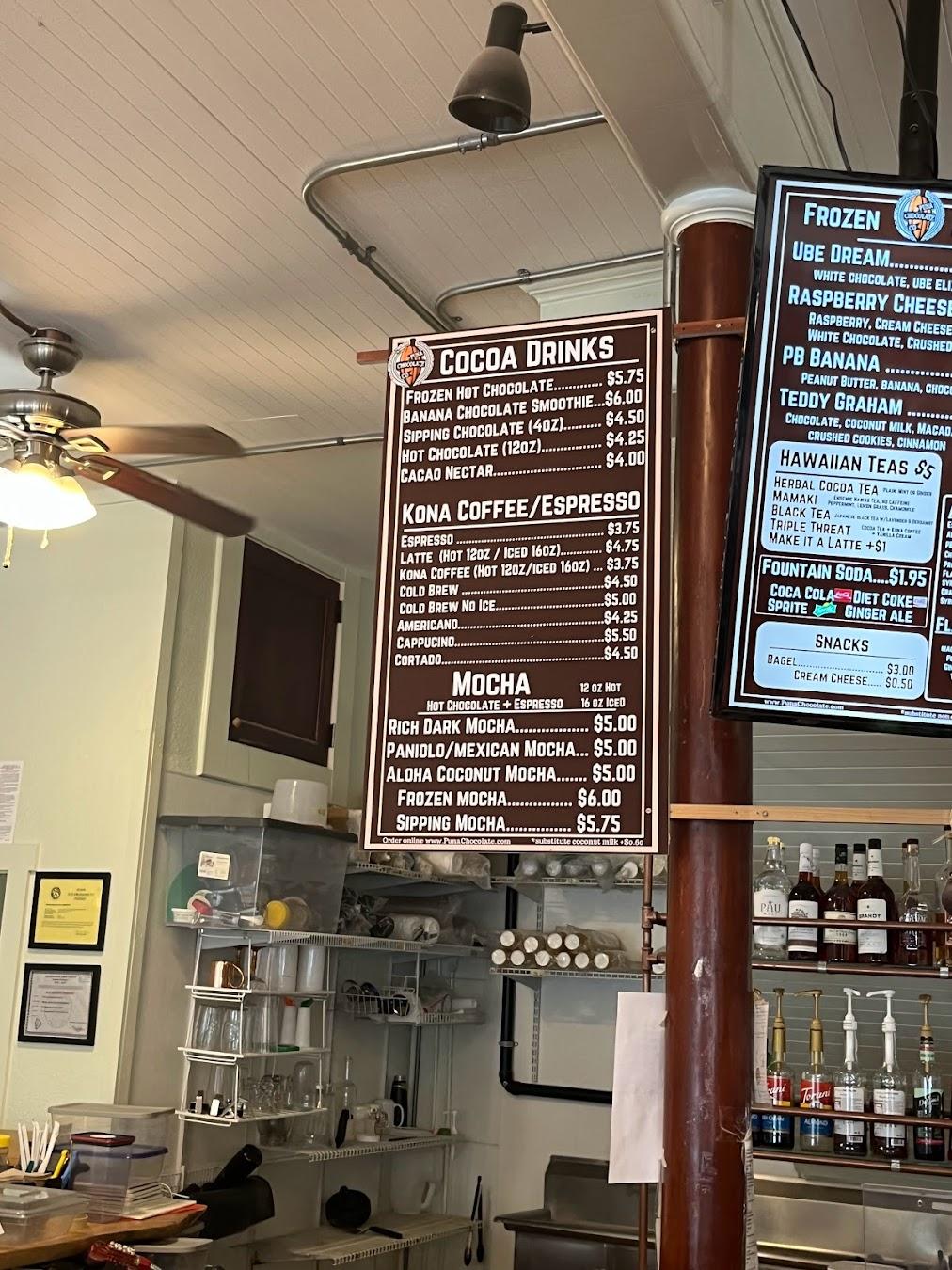
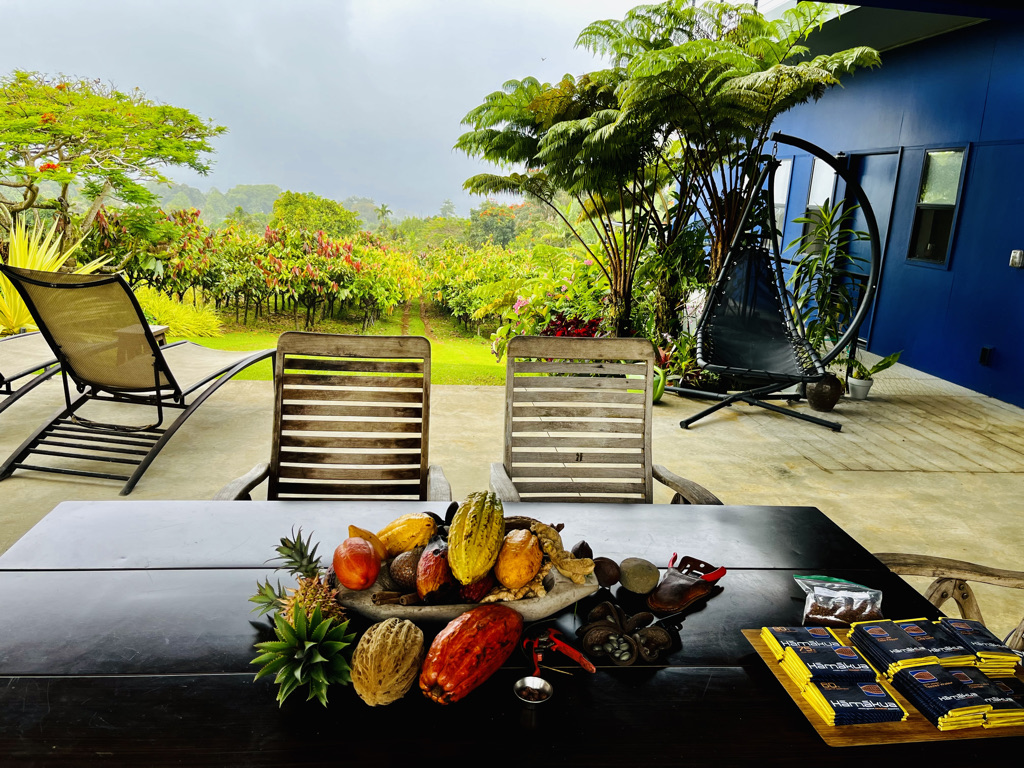
My first order of business was to check out the food situation. Although Hilo is pretty tiny, I was pleasantly surprised to see that downtown actually had quite a few hidden gems. Puna chocolate company was especially fun for a huge chocolate enthusiast like myself. The Hāmākua Chocolate Farm, which is only a short drive away, is also pretty amazing.
I spent the rest of the day in volcano national park, where you get a bizarre scenery of volcanic craters, hardened lava, ocean, and rainforest all in one fell swoop.
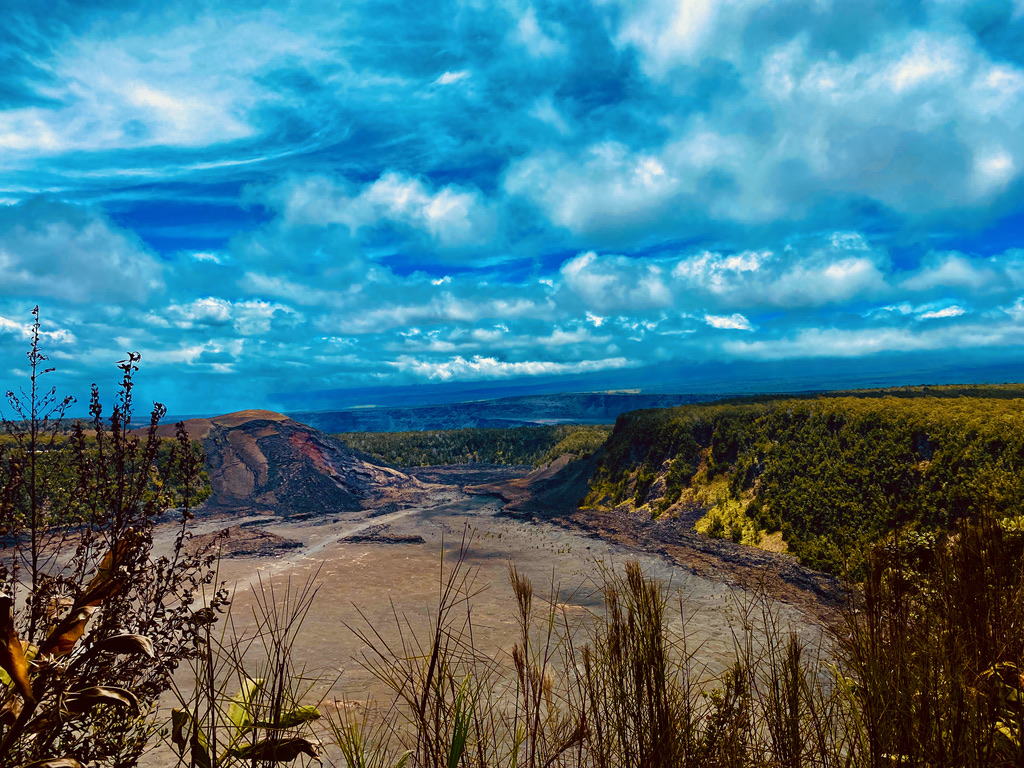

I ended up coming back to this park several times, and each time I saw something new and exciting. Luckily enough, I ended up being there while Mt. Kilauea was actively erupting. This, combined with the relative lack of light pollution made it really hard to bring myself to leave the park, even late into the night.

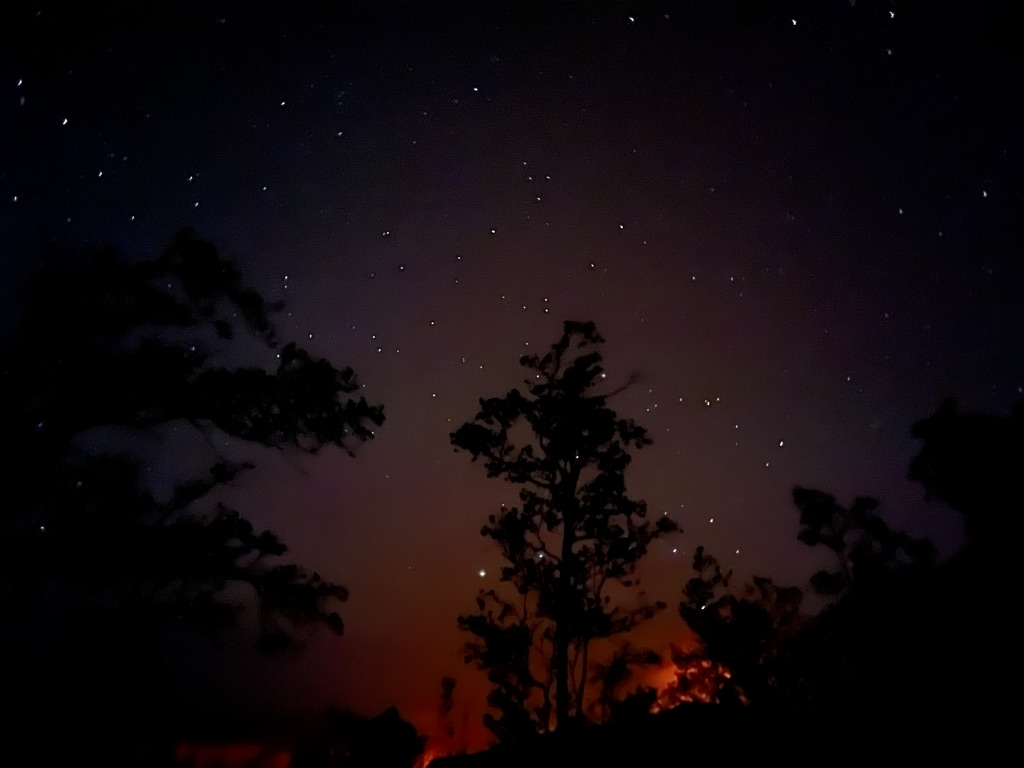
Watching the eruption during the rain was especially cool because the clouds started to turn all red too!
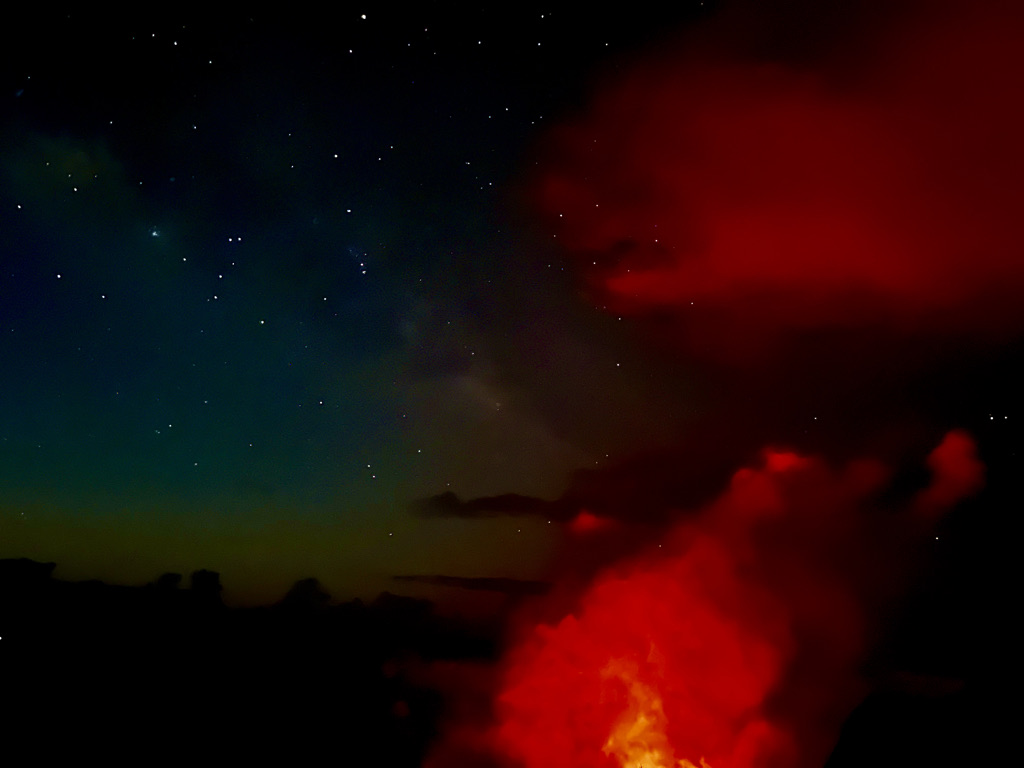

The moonrise that followed was also surreal.
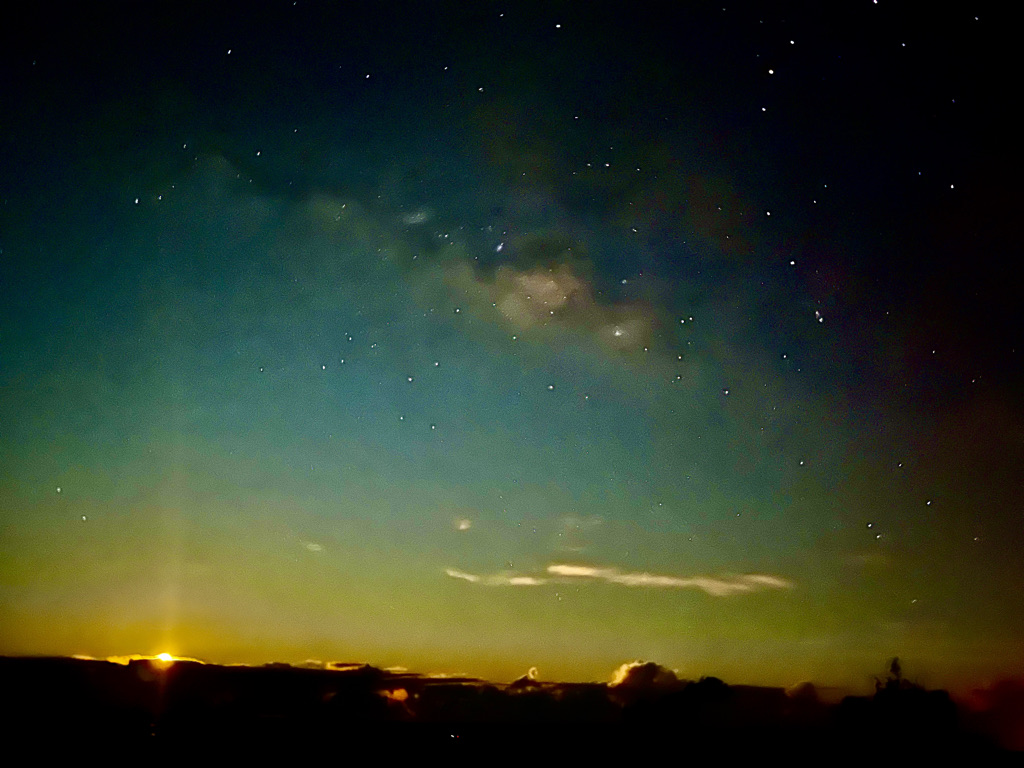

The sheer variety of scenery in this one park was truly stunning and I felt like my first few days in Hilo were an amazing distraction from life as a young computer scientist. I’d spent them rushing around every Hilo landmark I could find: I’d begin each day with no clear agenda, but by the end I’d have chaotically run back and forth between waterfalls, rainforests, volcanoes, and beaches. My goal initially was to just clear my head, and I was frequently reminded of one of my favorite quotes from TV:
“The key to being happy isn’t a search for meaning. It’s to just keep yourself busy with unimportant nonsense, and eventually, you’ll be dead.”
Mr. Peanutbutter, Bojack HorsemanIn many ways I have tried to live by this philosophy: things feel much more relaxed when you don’t think about each choice you make as some pivotal decision that will affect how every aspect of your life is about to unfold. Then again, I’ve found that I’m rarely satisfied with what I’m doing unless I have some sort of longer term goals. These goals don’t need to be profound or important, and I often do actually view them as “unimportant nonsense” like trying to achieve some time in running or trying hot chocolate in every cafe within a 1 mile radius. The beauty (or problem) with these goals is that they allow you to avoid “searching for meaning” because the goals themselves give your life the temporary meaning it seems we all tend to crave. With this in mind, I decided to push off my own introspection and strive for something more ambitious and concrete: it was time to climb some big mountains 🙂
-
Squashing Burn Out
Now with a job lined up, the goal was to get myself into a mental state where I’d be excited about work again. To make this possible, I set aside a few months of break between finishing my PhD and starting work to try and figure things out. I ended up devoting about half of this time to spending time with various friends. However, for the other half I wanted to try and find a way to do a mental reset of sorts. The whole job search and dissertation writing process is largely an exercise in selling yourself and trying to convince yourself and others that what you do is important. You give a lot of talks, answer a lot of questions, and do a lot of packaging to make yourself look as exciting as possible to companies that might want to hire you and faculty who are evaluating your dissertation. While of course this process had its highlights, and ultimately led to some good outcomes, I found it exceedingly tiring. It forced me to take myself too seriously, and try to craft unifying stories around projects when no such themes necessarily existed. My goal was to do fun work that kept me intellectually stimulated. I wasn’t particularly bothered about whether all of this work tied together in some grand way. The process of selling myself to this extent made me lose motivation even further, because in painstakingly packaging everything I did I started to lose sight of what I actually enjoyed about my work in the first place.
I’ve often found that spending time in nature helps me get a better perspective on things. It’s hard to take anything too seriously when you are looking up at a gigantic sky of stars or a never ending ocean. You just feel so tiny by comparison that you quickly realize nothing you are worried about really matters all that much. Conversely, I’ve found climbing mountains similarly relaxing. As I go up, my surroundings start to look smaller and smaller, until a giant truck on the highway just starts to look like a tiny ant scurrying along the road. It does literally change the way you look at things: anything that looks big and imposing just becomes an insignificant blip in the background. This prompted a 1 month, (mostly) solo trip to Hawaii to try and clear my mind. My goal was to plan things out as little as possible, to just show up and see what I’d make of everyday. It would be kind of like my very first research forays again: no real plan, just exploration, with no pressure to accomplish any concrete goal or tie things into some big agenda.
With this in mind, I booked some flights, a few random Airbnb’s, rented some cars, landed in Kona, and trusted that I would find good ways to entertain myself.
-
Where Should I Work?
I started by thinking about my own personal constraints and what I expected the constraints of potential employers to look like. I began by thinking about what I wanted to work on and what skills I had developed that I believed might set me apart from other candidates. I then started to think about what sort of industries would allow me to work on what I wanted and what specific types of companies within those industries I expected might value my skills the most. In my case, I knew that I wanted to work at the intersection of machine learning and robotics, and I had specifically developed skills in how machine learning could be used to allow robots to learn various tasks while still acting safely in the world.
This made me zero-in on industries where safety critical robotics was important such as self-driving and robotic manufacturing/assembly. Then, I started to think about which companies within these industries would actually find my skills most useful. I concluded that these were either large industrial robotics research labs which had the freedom to explore how various ideas in machine learning could be used for future robotic applications or startup companies working on challenging enough problems that using new ideas in machine learning would be vital to making their products work at all. Fortunately, I was in a position where the work in my PhD was relatively applied, so it was somewhat easier to think about how my interests and skills might connect to what was going on in industry.
I started by sending emails to various industry contacts I had developed both during research work and through friendships in undergrad and grad school. The interviews started coming along, and soon enough I had a few offers to think about from both industrial research labs and startups. I had still put off trying to figure out which of these options to pursue, and I ended up narrowing down my decision to two companies: an autonomous vehicle startup and a larger industrial research lab. As has been a theme in many of my life decisions, the reason I was excited by these specific companies was primarily the people. All of the places I was considering had work that I knew I would find interesting, but these two companies seemed like places where I was pretty sure I would enjoy interacting with and working with my colleagues. The startup role would allow me to use many ideas from my research and still give me a lot of freedom to explore various ideas, but the focus would shift away from publication and towards getting a car on the road. The industry research lab would allow me to continue a very similar life as I had as a PhD student, but with of course the extra freedom that comes from having more money. I talked to a bunch of people: my friends, my labmates, my potential coworkers, a few randos I met at coffee shops, but ultimately I ended up flipping a coin, going with the startup, and justifying my decision to myself later. I figured it’ll be a nice change of pace, and you don’t work anywhere forever.
-
So What do I Do Now?
In many ways, the job search process after a PhD can be even more stressful than after undergrad. Most people do a PhD because they are genuinely interested in something, or at least interested enough to dedicate 4-7 years diving deep into one specific aspect of it. After this process though, you’ve typically dove so deep into some obscure topic that it is pretty easy to lose sight of what’s going on more broadly. There are many ways to mitigate this of course: you can talk to people researching in other fields, you can engage with industry via internships, etc…but it’s still a classic occupational hazard. The result often is that once you start thinking about finishing, you realize that your skillset is so specific that there are only a few things you can do with it. There is also sometimes a bit more pressure both financially and egotistically. You’ve spent so much time in school now that you really do need some cash to keep yourself afloat. You also feel like having expended so much effort on your education, you gotta have a shiny job to show for it.
A PhD is ultimately a course of training for you to become an independent researcher. As a result, it is often framed as a gateway to academic positions, such as post-docs, professorships, and so on. However, training as a researcher does help you in a number of other ways. Any research project begins with convincing people why it generally matters. Ultimately, you gotta convince your advisor it’s worth their time to support, your collaborators to help you, and funding sources to throw money at you. Then you need to build an understanding of how other people have thought about similar problems before and convince yourself and others that you have something new to contribute. Finally, once you’ve gone off and done your thing, you need to convince the broader community that you’ve done something worthwhile: What have you done that previous researchers didn’t? What does this enable more broadly in the future? What are the key things you learned that others can take away for other similar work? Beyond the various technical skills that you of course build up when doing research, I’m convinced that this training in communication and persuasion is of potentially even greater value as it translates well into almost anything you might want to do in the future. Even in industry, starting new projects within a company or even starting a new company from scratch will require you to ask very similar questions and convince people to believe in both your initial vision and your attempts to bring that vision to reality.
The first thing to decide was whether I wanted to go the academic route and apply for postdoc/faculty positions or go to industry. Honestly, academia seemed pretty appealing at first. Life as an academic appeared to be some combination of generating and working on research ideas yourself, training younger researchers to build upon and extend your ideas and grow into researchers themselves, communicating fundamental ideas about your field to a broader audience by teaching classes, and fundraising to maintain your ability to do your research and hire students to help get things done. In many ways, life as a young professor sounded like having a small startup company within a larger entity (the university) since you have the license to mostly work on whatever you want, but the onus is still on you to make sure you have the funds to keep yourself afloat. Continuing to think like a researcher and mentoring/teaching younger researchers was appealing, but the constant pressure to acquire funding and the possibility of continuing to disconnect from practical problems did concern me. Different people will of course navigate these tradeoffs differently, but for me this made industry the more appealing route.
Now that I was pretty set on industry, the second thing to decide was what I wanted out of an industry job. At a high-level, at least in computer science, jobs in industry tend to come in one of two flavors. There are industry research jobs, where the primary mandate is to continue to publish original research. These are primarily available in larger companies that have the funds and freedom to explore many directions that may not pan out in the hopes that some of the research they fund will be relevant to future products. Another core motivation is simply improving brand recognition: Google improves its appeal by generating top tier research or hiring well known researchers, even if their work doesn’t ultimately contribute directly to Google’s products. The bulk of available jobs were of the second flavor: applied work focused on building a product. These jobs are often also quite appealing to researchers, since many products these days are of sufficient complexity that they require application and development of fundamentally new ideas to make them work. Industry research jobs felt like the perfect middle ground between academia and these traditional product focused roles: you can get (almost) the same freedom as academia to work on whatever you want, significantly higher pay, and none of the stress of acquiring tenure or the funds to continue your work. Still, I was also hoping for somewhat of a change. I continued to be concerned that my work had no immediate value, and I was not sure whether industrial research work would be sufficiently motivating if my main job would be continuing to publish papers that may only have a longer term impact. I never resolved this uncertainty before my job search began, and just ended up punting on this issue to see whether talking to people in various companies directly would help me figure it out.
-
No More School??
Last September it became clear that it was time to think about wrapping up my PhD and start thinking about what life might look like after it. As an undergrad, people are often faced with a lot of doubts and uncertainty when they are approaching the end, but it is usually quite clear when the end is near. However, as a PhD student, the end comes about more as a mutual agreement between you and your advisor that (1) you have done enough to graduate and (2) that you actually want to graduate. After all, a PhD is really a personal journey that varies wildly across disciplines, schools, and individuals so the end (as well as the start and everything in between) is largely what you make of it. This makes for a strange tradeoff. To some extent you do have more flexibility about when you finish than in undergrad, but at the same time you can be pushed out earlier or later than you’d like due to factors out of your control.
Once I realized I’d finally be leaving school, some mild existential dread started to set in. After undergrad, although I’d explored some options in industry through internships, I had never seriously considered leaving school. In undergrad, my goal was mainly just to learn as much random stuff as possible, and I found engaging with research the ideal way to do so. With the help of a number of very supportive research mentors and collaborators, I was fortunate to get to play with a range of problems in areas such as biomedical signal processing, earthquake detection, and power systems optimization. Comparing this freedom with the more rigid lifestyle I associated with 9-5 jobs, I figured that continuing with the research lifestyle would be a good source of entertainment. I didn’t really know what I wanted to work on, and my decision making process wasn’t particularly nuanced: I liked school, I liked learning things, and I liked the freedom academic exploration allowed. I am aware that I am fortunate to have grown up in circumstances that permitted such an attitude: if I had to immediately support members of my family or climb out of poverty, this type of thinking would likely have been impossible.
When I started my PhD, I found that while life as a researcher does give you a lot of freedom to explore, a PhD isn’t just about learning completely random things. Ultimately, the goal is to develop a research agenda and expertise in a specific topic. For some, this search is a function of trying a large number of things and finally converging on something that they find inspiring. While this approach sounds compelling as it makes research life feel like a quest for personal discovery, for me it was somewhat of the opposite. Coming out of undergrad, I was honestly quite easily excited by pretty much everything, so once I found an area with enough room for innovation and some friendly people to work with, I was hooked. What I worked on didn’t matter to me as much as the feeling that I could try a bunch of things, explore my curiosity, and talk about these ideas with other like-minded people.
Once I got settled in, life as a PhD student was mostly just as unstructured as I was hoping for. It had its ups and downs, but I did enjoy the relative freedom to let my mind wander and set my own schedule. It was not without stress, but for a while it was also quite comfortable. As a researcher you do have similar challenges as with any other job: a pressure to work hard, the pressure to communicate and advocate for your work, and the stress associated with overcoming your own self doubts and insecurities. At the same time, your work does tend to have a liberating feeling of irrelevance. Generally, you aren’t performing open heart surgery or deploying systems that are going to immediately be in the hands of millions of people, so there isn’t as much short-term concern about the impact of your work.
I enjoyed this for a while, but eventually I found that this liberating feeling also led to a strange sort of burn out. I could usually communicate what the point of my work was academically, but started to lose motivation because I lost sight of how this work tied into the real world outside of academia. Once this burnout hit its peak, luckily I was also at the point where there was a general agreement that I had done enough work to finish up my PhD.
-
Hello World!
Hi I’m Ashwin! I’m starting this blog mostly to just reflect on the wild variety of things that tend to happen in one’s twenties. I’d also like to start this blog by giving a shoutout to my former colleague Daniel Seita, whose blog helped inspire me to start this one. I’ll start by musing about the somewhat chaotic process of transitioning from the relative comfort of school to the real world, but I’m sure my blog topics will continue to evolve as life goes on.
-
Subscribe
Subscribed
Already have a WordPress.com account? Log in now.
 Schwinn's Musings